Tree Pruning in Hillingdon
Keeping trees healthy, attractive, and safe is important for homes and businesses across the borough, and professional tree pruning in Hillingdon plays a major part in that. Whether you have a mature oak in a suburban garden, boundary trees near a driveway, or a row of ornamental trees outside a commercial property, the right pruning approach can improve structure, reduce risk, and support long-term growth. For many local property owners, pruning is not just about appearance; it is about making sure trees coexist well with buildings, gardens, footpaths, parking areas, and neighbouring land.
Hillingdon is home to a wide range of properties, from traditional family houses and larger detached homes to newer developments, flats, schools, office sites, retail units, and industrial estates. That variety means no two pruning jobs are quite the same. A tree overhanging a terraced property in a tighter street will need a different approach to one standing in a spacious garden in Northwood, Ruislip, Uxbridge, Hayes, West Drayton, or Ickenham. A local team understands those differences and can recommend work that suits the tree, the site, and the people using the space.
If you are thinking about tidying back overgrown branches, improving light into your home, managing a tree that is brushing against fencing or gutters, or arranging planned maintenance for a business property, a carefully planned pruning service can help. Healthy pruning is about more than cutting branches back; it is about shaping the canopy responsibly, protecting the tree’s future, and making the property safer and easier to manage.
Why tree pruning matters for Hillingdon properties
Tree pruning is often requested for very practical reasons. In Hillingdon, homeowners regularly deal with branches reaching toward roofs, sheds, garages, windows, and shared boundaries. Commercial clients may need regular pruning to keep entrances clear, maintain visibility for customers, or stop trees interfering with car parks, signage, and loading bays. In both cases, pruning can make a noticeable difference to everyday use of the property.
Well-timed tree pruning can also support the health and safety of the tree itself. By removing dead, diseased, damaged, or crossing branches, the tree can direct energy into stronger growth. In some cases, reducing weight in crowded parts of the canopy can lower the chance of branch failure during strong winds, which is especially useful during harsher weather. While Hillingdon benefits from plenty of green space, local storms and periods of heavy rain can still put pressure on trees, especially those already carrying old weak growth.
Pruning can also improve light, airflow, and shape. Gardens with mature planting may feel dark or enclosed if canopies are left unmanaged for too long. Carefully selected cuts can open up the crown without stripping away the tree’s character. That balance matters, because over-pruning can do more harm than good. A professional service aims to remove only what is necessary while keeping the natural form of the tree in mind.
What our tree pruning service includes
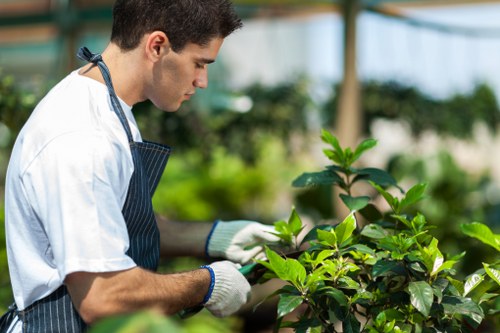
When customers enquire about tree pruning in Hillingdon, they often want to know what is actually included. The exact work depends on the tree, its condition, and what the site needs, but a good service typically begins with a visual assessment. This helps identify branch health, structural concerns, overextension, and any issues affecting nearby buildings, paths, or vehicles.
Typical pruning work may include:
- Removing dead, diseased, or damaged branches
- Reducing overextended or heavy limbs
- Thinning selected areas of the canopy where appropriate
- Shaping trees to maintain a balanced appearance
- Raising the crown to improve clearance for walkways, driveways, or access routes
- Managing growth away from buildings, fences, and overhead lines where safe and permitted
- Clearing obstructive branches that affect light or visibility
In some situations, the work may involve formative pruning for younger trees. This is especially helpful when a tree is still developing its shape, because small, sensible cuts can encourage a stronger long-term structure. For older trees, the focus may be on selective maintenance to keep the crown stable and reduce nuisance growth without causing stress.
Responsible pruning is precise work. It is not simply a matter of trimming everything back evenly. Different species respond differently, and the season, tree age, and site conditions all matter. That is why local knowledge is useful, especially in a borough as mixed as Hillingdon where mature garden trees, street-facing trees, and estate planting all need different treatment.
How tree pruning works from first enquiry to completion

Many customers want a clear idea of the process before they book. A straightforward tree pruning job usually starts with an enquiry and a discussion about the tree or trees involved. You may be asked about what you have noticed: branches touching the roof, excessive shade, concerns after bad weather, visible deadwood, or routine maintenance needs. Photos can sometimes help, but a site visit is often the best way to assess the work properly.
Once the site has been reviewed, the next step is to agree on the most suitable pruning approach. This may involve crown lifting, crown thinning, crown reduction, deadwood removal, or a combination of methods. The aim is to achieve the result you need while preserving the tree’s health and natural shape. If there are access issues, nearby structures, or other constraints, those will also be taken into account.
On the day of the work, the area is usually prepared for safety and efficiency. Branches are cut using appropriate tools and methods, and the team works carefully to avoid unnecessary disturbance to lawns, planted borders, paths, or adjoining property. Where possible, arisings are collected and cleared away, leaving the space tidy. If the tree is large, awkwardly positioned, or close to access routes, the work may require extra time and planning to complete it safely.
The final step is a check of the finished tree and the surrounding area. Good pruning should leave the tree with a better structure, improved clearance, and a more balanced appearance. For local customers, that practical result is often what matters most: a safer, smarter outdoor space that is easier to live with and maintain.
Types of pruning commonly requested in Hillingdon
There are several pruning methods, and the right one depends on the purpose of the work. A reliable tree service will not use a one-size-fits-all approach. Instead, the method should be chosen to suit the species, size, condition, and location of the tree.
Crown reduction
Crown reduction is used when a tree has become too large for its setting or is putting pressure on nearby structures. The height or spread is reduced in a controlled way, keeping the shape as natural as possible. This can be helpful for trees close to homes in residential streets, where branches may be encroaching on roofs or windows, or in gardens where a tree is dominating the space.
Crown thinning
Crown thinning removes selected branches throughout the canopy to reduce density while maintaining overall size. This may improve light penetration and air movement, which can be useful in enclosed gardens or near patios and outdoor seating areas. It can also reduce wind resistance in some trees, although the method must be applied carefully.
Crown lifting
Crown lifting removes lower branches to create clearance beneath the tree. This is often requested where branches are interfering with pathways, access to garages, visibility on driveways, or movement around commercial premises. In Hillingdon, it can be particularly useful near front gardens, shared parking spaces, and access roads.
Deadwood removal
Deadwood removal focuses on cutting out dead branches that may fall unexpectedly or simply make the tree look untidy. This is a sensible maintenance step for mature trees, especially in places used by families, customers, visitors, or staff.
Formative pruning
For younger trees, formative pruning helps guide the structure early on. This can reduce future problems by encouraging good branch spacing and a strong central framework. Early care often prevents larger issues later, making this one of the most valuable long-term tree management steps available to local property owners.
Why local knowledge matters in Hillingdon
Choosing a local company for tree pruning in Hillingdon can make a real difference. A team familiar with the borough understands the mix of housing styles, road layouts, and access conditions that affect how work is carried out. Some areas have wide front gardens and easier vehicle access; others have narrow side passages, limited parking, or shared boundaries that make equipment movement more challenging. Planning matters, and local experience helps keep the job efficient and considerate.
Local knowledge is also useful when dealing with the practicalities of nearby roads, pedestrian routes, and busy residential streets. In parts of Hillingdon such as Uxbridge, Hayes, South Ruislip, or near the more built-up parts of Ruislip Manor and West Drayton, access and parking can be tight. A team that regularly works in the area is more likely to arrive prepared, think ahead about where vehicles and equipment can be positioned, and keep disruption to a minimum.
Different property types also create different pruning needs. For example, a tree beside a family garden may be mostly about light, safety, and tidy appearance. A tree near a school or nursery may need regular maintenance to keep routes safe and open. On a commercial site, pruning might be part of wider grounds care, helping the premises look professional and stay easy to navigate. The right local service understands these everyday priorities and works with them in mind.
Tree pruning for homes, landlords, and businesses
Tree pruning is not only for homeowners with large gardens. It can be just as important for landlords, managing agents, care facilities, retail units, offices, hospitality premises, and industrial or warehouse settings. Each of these environments has different practical demands, but all benefit from well-managed tree growth.
Residential tree pruning
For homeowners, pruning often supports light levels, garden use, and safety. Overgrown branches can make a property feel enclosed, block sunlight from lawns and rooms, and create leaf fall problems around gutters and drains. In family homes, pruning can also reduce low branches near play areas, driveways, and paths. If trees are close to a neighbour’s boundary, careful pruning can help keep relations smooth by reducing encroachment while respecting the tree’s needs.
Commercial tree pruning
For businesses, appearance and accessibility matter. Branches should not obstruct signs, block sightlines, interfere with customer parking, or cause hazards near entrances. Regular pruning can help keep the site presentable and easier to manage through the year. It can also support safety around delivery areas, staff walkways, and building perimeters.
Landlord and property management work
Landlords and property managers often need tree work to maintain external areas responsibly. Pruning helps reduce complaints about shade, overgrowth, or access problems, and it supports continued upkeep of communal spaces. For larger sites or multiple properties, a planned approach can be more efficient than waiting until a tree becomes a problem.
Signs your tree may need pruning
It is not always obvious when pruning is needed, especially if a tree has grown gradually over many years. However, there are several common signs that a tree may benefit from professional attention. If you notice one or more of the following, it may be time to arrange an assessment:
- Branches touching the roof, gutters, or windows
- Low limbs blocking driveways, paths, or access points
- Dead or broken branches hanging in the canopy
- A tree casting too much shade over the garden or property
- Branches rubbing together or crossing awkwardly
- Encroachment over a boundary or shared space
- Uneven canopy shape after storm damage or previous poor cutting
- Leaves and debris causing ongoing maintenance issues
If the tree is close to the public highway, footway, or a neighbouring property, the need for action can be even more urgent. The goal is not just to tidy the tree, but to prevent avoidable problems before they become more serious. In many cases, a modest pruning visit is enough to restore balance and make the situation easier to manage.
Do not wait until a branch causes damage. Preventative pruning can be a simpler and more cost-effective way to deal with tree growth than reacting after an issue has already occurred.
Preparation checklist before your pruning appointment
Preparing for tree pruning in Hillingdon does not need to be complicated, but a few practical steps can help the visit go smoothly. If you are arranging work at a home or business, it is helpful to think ahead about access, parking, and anything that could be affected by the job.
- Identify the tree or trees that need attention and note the main issue.
- Check whether branches are overhanging roofs, paths, or neighbouring land.
- Make sure gates, side access, and driveways can be used if needed.
- Move vehicles, bins, garden furniture, and fragile items away from the work area if advised.
- Let neighbouring occupiers know if work may affect shared boundaries or access points.
- Keep pets and children away from the working area during the visit.
- Raise any special concerns, such as soft ground, water features, or delicate planting close to the tree.
For larger or more complex sites, it is also useful to consider where clear waste can be left, how machinery might access the area, and whether there are restrictions on timing. A local team can often help with this planning during the quotation stage so the pruning is carried out with minimal disruption.
What affects the cost of tree pruning?
Every tree pruning job is different, so the cost depends on several practical factors rather than a simple fixed formula. Customers in Hillingdon often appreciate clear explanations because it helps them understand why one tree might require more work than another. Common pricing factors include:
- Size and height of the tree — larger trees usually take more time and equipment
- Type of pruning required — simple deadwood removal is different from careful reduction work
- Number of trees — several trees may be more efficient when completed together
- Access and parking — narrow entries, restricted parking, or awkward positioning can affect setup
- Site conditions — slopes, soft ground, nearby structures, and obstacles all influence the work
- Waste removal — clearing and disposing of branches may be included or arranged separately
- Urgency and timing — planned routine maintenance is different from time-sensitive work after storm damage
Because these factors vary so much, the best approach is usually to request a site-specific quote. That allows the work to be matched to the tree and the property rather than estimated blindly. If you are comparing options, look for clear explanations of what is included, how access will be handled, and what result you can expect once the pruning is complete.
Why choose a local tree pruning company in Hillingdon?
There are practical advantages to using a local team for tree pruning in Hillingdon rather than someone unfamiliar with the area. A local company is more likely to understand traffic patterns, common access constraints, housing layouts, and the different expectations of customers across the borough. That can save time and reduce the chance of avoidable complications.
Local service is also helpful when a tree issue needs a quicker response. Strong winds, seasonal growth, and sudden visibility or access problems can create urgent requests, especially for homes with limited outdoor space or for businesses that need to keep entrances clear. A nearby team can often assess the issue sooner and advise on the safest next step.
Another benefit is continuity. If you need ongoing maintenance, a local service can keep track of how a tree has responded to previous work and recommend a sensible schedule for future pruning. That matters for mature trees, boundary planting, and trees in spaces where consistent care is the best way to avoid repeated problems. Regular, thoughtful pruning is usually better than occasional heavy cutting.
Areas covered across Hillingdon
Tree pruning services are commonly requested across the whole borough, including residential streets, estates, shopping parades, schools, and commercial sites. Areas often served include:
- Uxbridge
- Hayes
- Ruislip
- Northwood
- Ickenham
- West Drayton
- Yiewsley
- South Ruislip
- Hillingdon
- Eastcote
- Harlington
- Long Lane and surrounding neighbourhoods
These locations include a mix of older streets, newer developments, and commercial districts, so pruning requests can range from small domestic tree shaping to larger maintenance work on shared grounds. If your property is near a boundary, a main road, or a busy access route, local planning and careful execution become even more valuable.
Frequently asked questions about tree pruning in Hillingdon
How often should trees be pruned?
There is no single answer for every tree. Some younger trees benefit from regular formative pruning, while mature trees may only need attention occasionally. Fast-growing species, trees near buildings, or trees with recurring issues may need more frequent maintenance. A site visit is the best way to judge the right interval.
Is pruning the same as cutting a tree down?
No. Pruning is selective work designed to improve the tree’s health, structure, appearance, or safety. The tree remains in place and continues growing, but in a more controlled and manageable way.
Will pruning harm my tree?
When carried out properly, pruning should support the tree rather than damage it. Problems usually arise when too much is removed, cuts are made in the wrong places, or the wrong technique is used for the species. That is why careful, knowledgeable work is important.
Can pruning help if a tree is blocking light?
Yes, in many cases. Crown thinning, reduction, or selective shaping can improve light without removing the tree altogether. The exact result depends on the species, size, and condition of the tree.
Do I need permission for pruning?
Sometimes, yes. Trees may be protected by a Tree Preservation Order or be within a conservation area, which can affect what work is allowed. If you are unsure, it is wise to check before booking. A professional local service can often help you understand whether the work needs extra consideration.
Can you prune a tree near a fence or neighbour’s boundary?
Yes, but it must be handled carefully. Boundary trees are common in Hillingdon’s residential areas, and pruning needs to respect ownership, safety, and the tree’s structure. If branches extend into your space, you should still ensure the work is planned properly and carried out responsibly.
Choosing the right time for pruning
The best time for pruning depends on the species and the reason for the work. Some trees respond well to pruning in dormant periods, while others may be better handled at specific times of year to reduce stress or sap bleeding. In practical terms, local customers often choose the time that suits the issue at hand: before storm season, ahead of property works, before major garden use, or as part of routine maintenance.
For flowering trees, timing can be especially important if you want to preserve blossom. For fruit trees, pruning can affect future yield and shape. For evergreen species, careful planning is needed to avoid leaving the tree too exposed. A knowledgeable team will consider these factors before recommending the work.
Booking tree pruning in Hillingdon
If your tree is becoming difficult to manage, affecting light, blocking access, or creating worries about safety, now is a sensible time to take action. Professional pruning can restore balance, improve the look of your property, and help protect both the tree and the surrounding space. It is often a practical investment in the comfort and usability of your home or business.
Contact us today to discuss your tree pruning needs in Hillingdon, request a free quote, or arrange a site visit. Whether you need a one-off tidy-up, selective crown work, or planned maintenance for multiple trees, a local service can help you choose the right approach and book the work at a convenient time.
Book your service now if you want an experienced local team to manage your trees with care, attention, and an understanding of the property challenges common across the borough. Thoughtful pruning can make a lasting difference, and getting it done properly is the easiest way to keep your trees healthy and your space manageable.